

You finish an article, a report, or a great podcast episode feeling like you learned something useful.
Then someone asks about it a week later.
You remember that it was good. You may even remember one phrase. But the point you wanted to keep is gone.
That experience is frustrating. It is also normal.
For people who read and save a lot, the problem is rarely a lack of effort. It is that useful information gets only one brief moment of attention before the next thing arrives.
Forgetting what you read is not a character flaw
The internet gives us more worthwhile information than any one person can hold onto.
Articles compete with messages, meetings, deadlines, saved links, and everything else that needs your attention. Even when you understand something clearly in the moment, there may be no natural reason for it to come back before it fades.
So the question is not, “Why can’t I remember everything?”
It is, “How can I give the ideas that matter another chance to stay?”
Reading once is usually not enough
One thoughtful read can change your perspective. But most useful ideas need a little more contact before they become easy to recall.
You do not need to reread every article from start to finish. That would turn reading into a full-time maintenance task.
What helps is a lighter pattern:
- Capture the useful input. Save the article, thought, or source while it is still relevant.
- Find the signal. Use a short summary or your own note to identify why it mattered.
- Return briefly. Come back to the idea when it has a chance to be useful again.
That final step is easy to miss. It is also where a saved item can start becoming a usable idea rather than another forgotten tab.
A better goal than perfect memory
Trying to remember everything creates pressure. It also makes every saved item feel equally important.
A better goal is to keep the ideas that support your work, decisions, curiosity, or future self.
For example, you may want to retain:
- A useful framework from a product strategy article.
- The key argument in an industry report.
- A sentence from an interview that changed how you see a problem.
- A research detail you may need during a later project.
You can let the rest go.
How ReChew helps useful ideas come back
ReChew is built for the gap between “I saw this” and “I can still use this.”
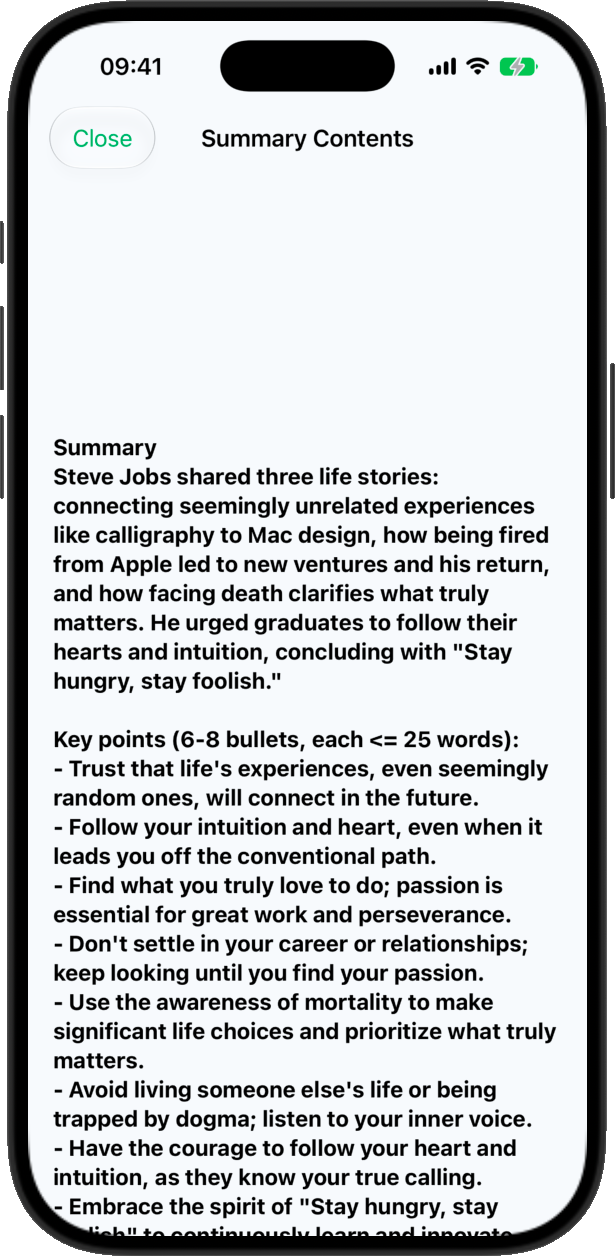
It helps turn saved links, notes, and daily input into material you can digest and revisit over time. AI-assisted summaries lower the barrier to re-entering an idea, while re-chewing loops and retention cues make it easier to notice what you have returned to.
It is not a promise that you will never forget.
It is a lighter system for giving useful information more than one chance to stay with you.
Try a kinder reading workflow
The next time you forget something you read, do not treat it as proof that reading was wasted.
Ask whether the idea had an opportunity to return.
If it did not, save the insight, make the first pass easier, and leave yourself a path back to it. That is often enough to turn more of your input into something that remains useful.
You do not need to remember everything. You need a better way to keep what matters.